
Saturday 9:30 – 11:10 (Main Hall)
“Moulinets – Windmills of death or just tilting at them?” (Sabre/Broadsword)
Kerry Tamplin (she/her)
London Historical Fencing Club
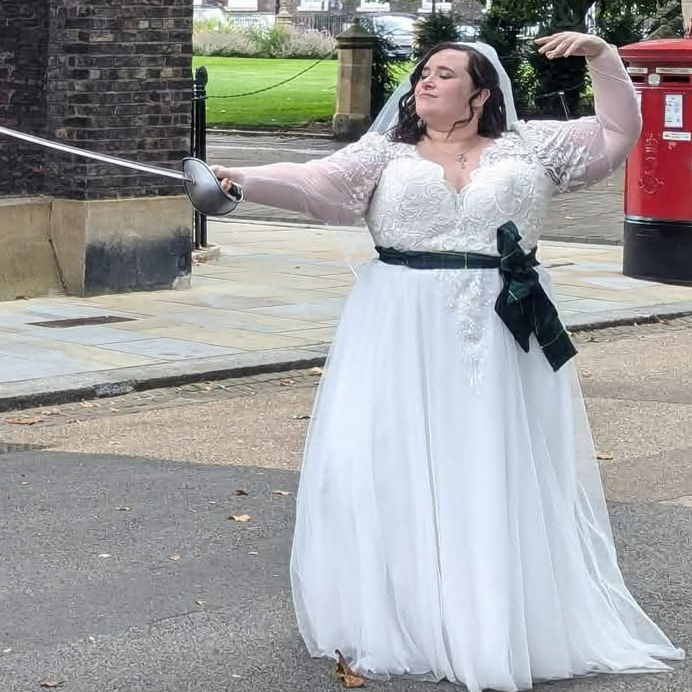
A wide variety of sabre interpretations make mention of the Moulinet, even if its “just to build wrist strength”. Regardless of this, we don’t often see it in competitive spaces. This year, I’ve been trying to dig into that.
In this lesson, we will draw from sources such as Rowarth, Hutton and more to examine the whats, hows and whys of moulinets and where we can bring them into our everyday fencing.
Kit required- mask, gorget, gloves and ideally a sabre or broadsword. There will be some synthetic broadswords & wooden singlesticks available to borrow if you do not have your own.
Saturday 9:30 – 11:10 (Training Room)
“Empty-handed” (Karate)
Holly Bamford (she/they)
York School of Defence
This class offers an introduction to the striking art of karate, covering some of Funakoshi’s 20 principles of karate. We’ll look at the first kata in the curriculum, Heian Shodan/Pinan Nidan, to bridge the gap between the solo drills of karate and their practical applications, and then channel our inner Daniel-san (headbands optional!) with some sparring drills.
No kit is needed. But make sure to wear sensible clothing (no zips, pockets or anything that might get caught) and no shoes. Please remove all jewellery and make sure nails are trimmed before the class.
Saturday 11:20 – 13:00 (Main Hall)
“ZORNHUB: the audacity of longsword with the sexiness of smallsword. Episode 2” (Longsword)
Claire Maries (she/her)
York School of Defence
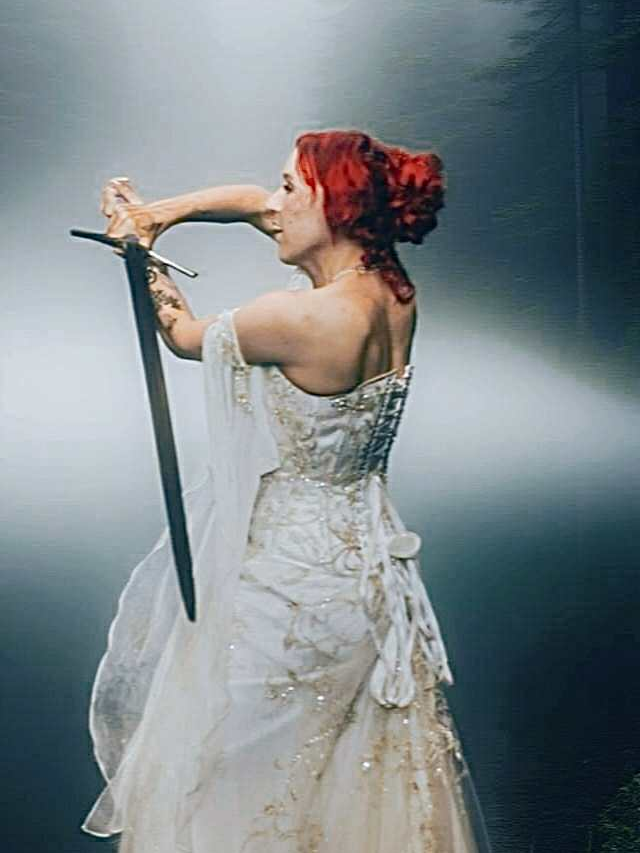
This class is aiming to get you thinking!
Kit requirements are a suitably safe (preferably tipped) longsword / feder; mask; gorget; light gloves; ideally a chest protector and / or jacket; and as many brain cells as you have available to you.
This is a continuation of episode 1 I ran at Stramash. We’re going to be looking at what longsword can learn from smallsword, with specific focus on comparisons between Joachim Meyer and Sir William Hope.
You don’t need to have done any smallsword (or even much longsword for that matter), or have attended my previous workshop on this topic, and if you have what we’re discussing won’t be ground breaking new techniques, but it will hopefully get you approaching longsword in a different mindset and give you some tools to hone your skills.
Saturday 11:20 – 13:00 (Training Room)
“Fighting with the Feet” (Savate)
Lauren Ireland (she/they)
York School of Defence

(Attendance of this class is mandatory if you wish to enter the savate tournament after lunch).
Savate is a unique French martial art that contains elements of both kicking and punching, however in this class we will focus solely on the kicking part of the art. Absolutely no experience is required, and we’ll primarily be focusing on the low and medium level kicks (although there will be some high kicks for people who want to push themselves a little bit further!) We’ll explore the social history around savate as well as it’s interesting cross-pollination with British pugilism, and we’ll all make friends while kicking each other.
If you train gently you can get away with no PPE in this class, however if you wish to up the intensity you will require shinguards as well as elbow protectors and boxing gloves (the gloves will be used to protect the fingers from breaking, not for hitting an opponent). You will require a pair of boxing boots, wrestling boots or other indoor only, mat safe shoes, and we can’t loan any of these out for obvious hygiene reasons! Groin protection is mandatory if you are equipped to need it.
Saturday 14:00 – 15:40 (Main Hall)
“No Rules but Skill: Knife and Tomahawk in Combat” (Tomahawk & Knife)
Emilia Skirmuntt (she/her)
Oxford School of the Sword
In this session, we temporarily abandon Europe, sensible footwear, and polite fencing conventions to explore two weapons of the 18th–19th century American frontier: the tomahawk and the bowie knife.
These weapons were designed for close-range problem-solving and decisive opinions. While they are not part of the European martial canon, they run on the same universal truths: distance still matters, timing still matters, structure really matters, and if you get it wrong things go downhill very fast.
We’ll look at what historical sources exist, how we reconstruct systems for weapons that were rarely taught in nice salles, and how environment, culture, and necessity shape martial arts when nobody is enforcing a rule set. Expect solo and paired work, discussion of how these weapons function together, and why frontier combat strongly favoured adaptability, aggression, and not hesitating politely.
This is not a technique-collection class. This is a principles class about chaos management, weapon literacy, and making good decisions while holding objects designed to end conversations.
Expect hands-on drilling, uncomfortable closeness, and a renewed respect for personal space.
All levels welcome. If you can hold a weapon and listen occasionally, you’re qualified.
You will need a fencing mask andlight gloves, also a tomahawk and bowie knife if you own them (and want to feel smug). A limited number of weapons will be provided by the instructor.
Saturday 14:00 – 15:40 (Training Room)
“Coup de Pied Cup” (Savate Tournament)
York School of Defence
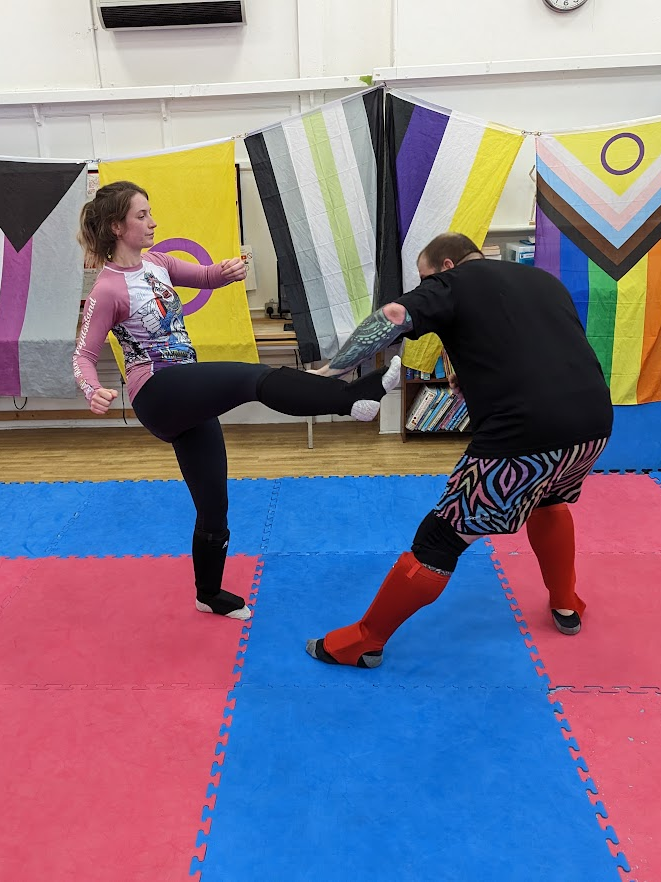
This year we will be hosting a classical savate tournament that is open to everyone as long as you have attended the morning savate lesson. There will be no prizes for 1st, 2nd and 3rd place, instead you will all vote for who you felt was the most technical competitor, and who you most enjoyed bouting against, and the people with the most votes will recieve the prizes.
The tournament will be light contact and limited to low and medium kicks with no punching or high kicks.
You will need shin guards to compete, and we would recommend elbow protection and boxing gloves to protect the hands. Some boxing gloves, elbow protectors and shin guards will be available to loan. You will require your own indoor shoes (boxing or wrestling boots or a pair of plimsolls) as you cannot enter with bare feet, and we cannot loan out shoes for obvious hygiene reasons! Please make absolutley sure you are wearing groin protection if you need it.
Saturday 15:50 – 17:30 (Main Hall)
“Greatswords – Technical Term: Big F*in Swords” (Big Swords!)
Anna Clisham (she/her/they/them)
Manchester School of Arms
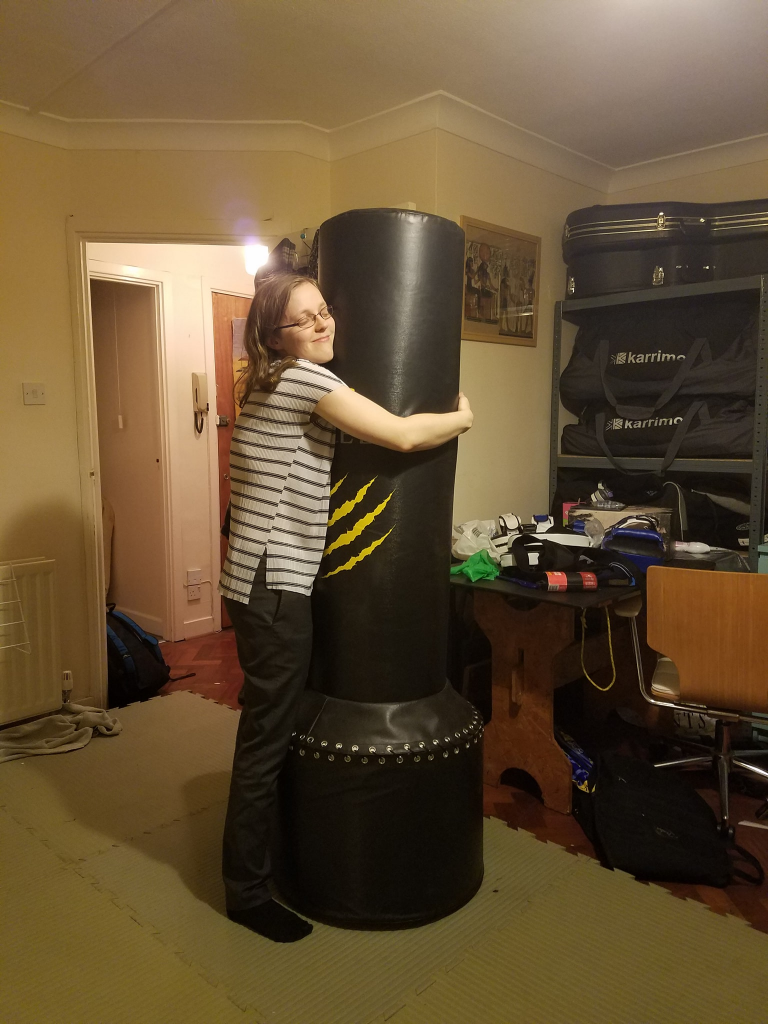
All swords are great, but Greatswords are greater! Also known as Montantes, Zweihanders, these are fantastic for a strength workout, brilliant for emphasising use of hips and core strength, and fun for swinging around in the garden and scaring the neighbours (don’t tell them I told you)!
This class will introduce you to the Greatsword and how you can use it. We’ll be taking 2 or 3 Simple Rules from Diogo Gomes de Figueyredo’s “Memorial of the Practice of the Montante”, practice them, and then test them out in a group scenario, with multiple opponents and obstacles to overcome!
Requirements:
Longsword (steel for practice and/or foam for scenarios). A greatsword is not required, but you’re encouraged to bring one if you have it!
Mask
Light cloves
Groin protection
No experience necessary – just the “quiet” desire to be a massive-sword wielding protagonist.
There will be some foam weapons to borrow on the day. A small number of Greatswords will be provided too if people want to try them out!
Saturday 15:50 – 17:30 (Training Room)
“Zetteling Down (with a Nice Cup of Tea)” (Lecture)
Lauren Stokeld (she/her)
York School of Defence

Why does a poem read so differently to a textbook? Why would you sound like a psychopath if you spoke the same way you would write a novel? Why on earth does any of this matter at a HEMA event?
The language we use when speaking and writing is massively impacted by context, purpose, form, society – HEMA fencing manuals are no different. Why does it matter if some bits are in verse and some bits in prose? Does it make a difference if a manuscript is a teaching aid or a marketing prop? What makes the zettel so damn popular with fencing masters?
If you like the idea of asking questions like these and you also like consuming hot beverages, then this workshop might just be the place for you. You don’t need to bring anything, except your curiosity and a willingness to be a guinea pig in one of my trademark experimental activities.
I hope to see you there!
Sunday 09:30 – 11:10 (Main Hall)
“The Lowdown: attacking and defending the lower body with the sabre” (Sabre)
Chloe Headdon (she/her)
Smart HEMA
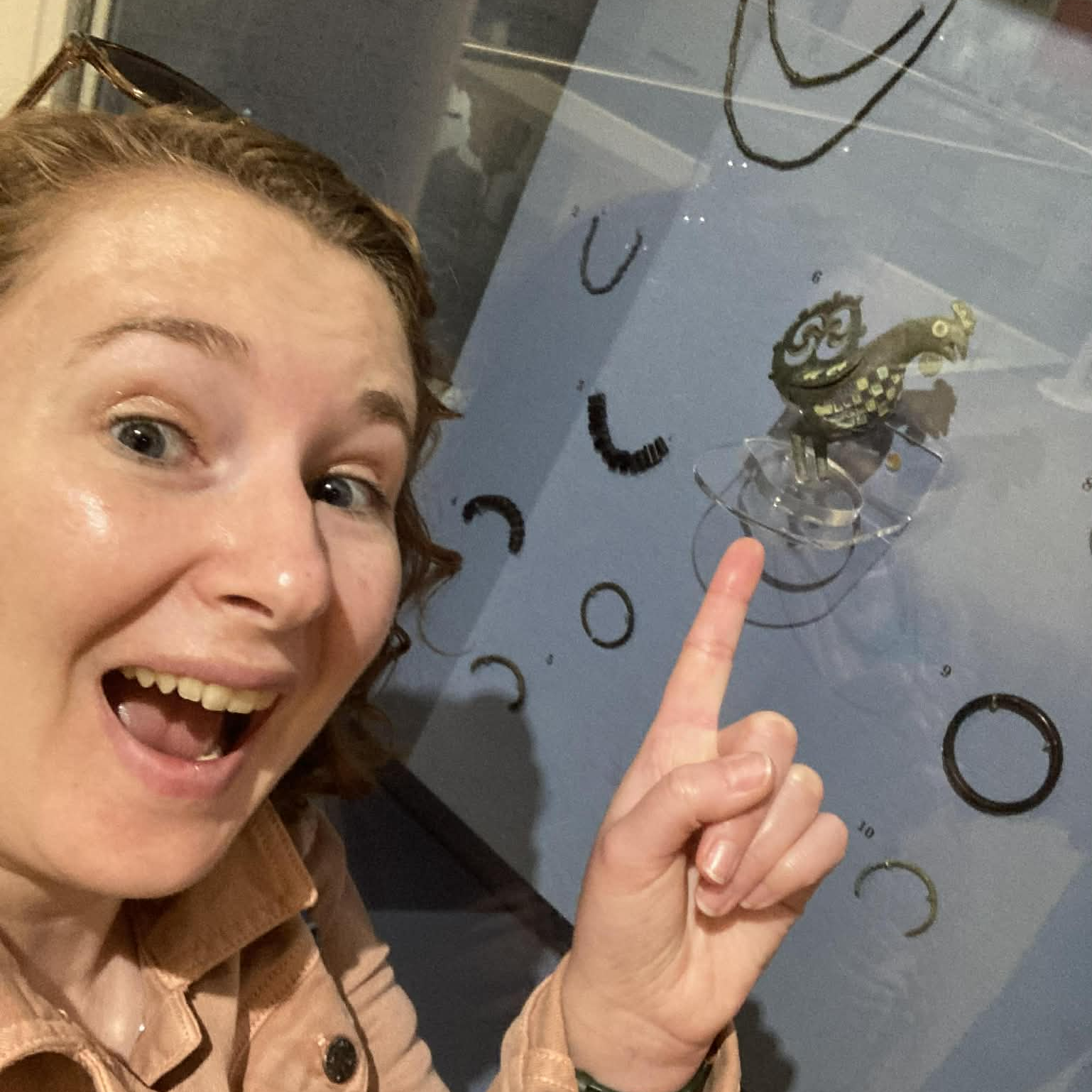
Lower target zones offer a wealth of opportunities in sabre, whether you are making a horizontal cut to the body which slips just below your opponent’s sword arm, or placing a perfectly-timed leg hit.
In this class we will draw on Roworth and Hutton to look at a variety of ways of attacking and defending the lower body, including the nuances of different parries, the timing and body mechanics of cuts, using the slip to your advantage – and how to avoid the fatal riposte to the head.
Requirements: mask, gloves, sabre or other single-handed sword. Optional: jacket and leg protection. There will be some synthetic broadswords & wooden singlesticks available to borrow if you do not have your own.
Sunday 09:30 – 11:10 (Training Room)
“Ask The Archeologist and Receive Cursed Knowledge” (Chat/Q&A)
Marese Curtin (she/her)
Medieval Combat Group
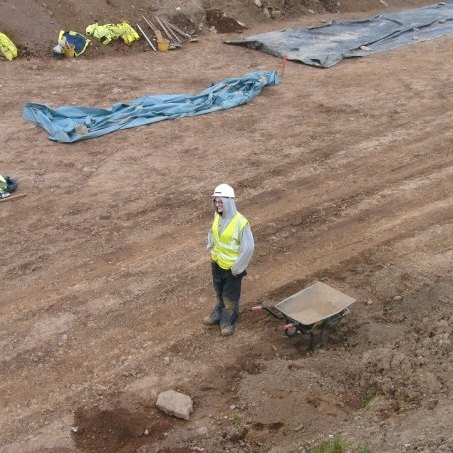
We’ve been trying to twist Marese’s arm for a while to come and give a lecture at Art That Adorns You, and we’ve compromised on a “dipping your toes into the water first” approach.
On Sunday morning Marese will be lurking in the training room with coffee and knowledge and you’re welcome to come and pick her brains in an informal chat/Q&A session. Come in, deliver sweets/cake/treats of some kind, keep her caffeinated and receive knowledge whilst recovering from the night before.
Please note, the knowledge may be cursed knowledge, and there may be rants, especially if you ask about Towton (please ask about Towton). Expect to have any Indiana Jones/Lara Croft notions of what it means to be an archeologist entirely abolished.
Sunday 11:20 – 13:00 (Main Hall)
“Be Excellent to Each Other: How to freeplay safely with minimal PPE” (Steel cutting swords)
Lauren Ireland (she/they)
York School of Defence
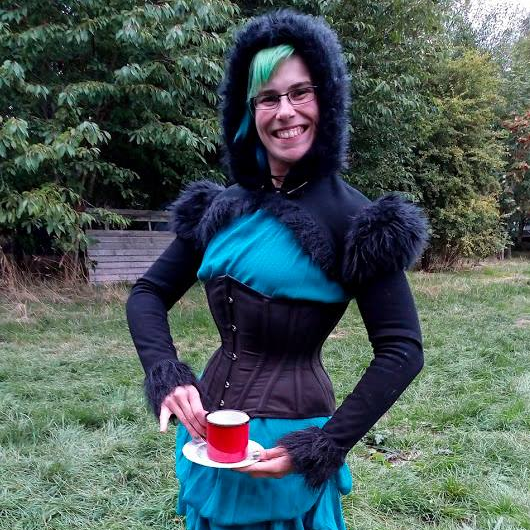
(Attendance of this class is mandatory if you wish to enter the fencing tournament after lunch).
This class will cover the fundamentals of freeplay without PPE. Using only a mask, light gloves, and control (as befits a martial art), we’ll be exploring a series of exercises and games that will explore the art of controlled freeplay. This works well as a standalone class or as preparation for the tournament in the afternoon.
You will require a fencing mask (ideally with back of the head protection), and a pair of light gloves (no SPES heavies, Red Dragons or similar!) and a gorget. Groin protection is mandatory if you are genitally equipped to require it. You will also need your own steel sword to train with. The class is not suitable for thrusting oriented weapons such as smallswords or later period rapiers, however sideswords, cutting rapiers, arming swords, messers, longswords, sabres, broadswords and similar are all welcome.
Sunday 11:20 – 13:00 (Training Room)
“Crash, Bang, Wallop! Fake fighting and why you should love it just as much as the real thing.”(Unarmed Stage Combat)
Victoria Clow (she/her)
Saorsa Swords

Stage Combat is an art in itself and takes inspiration from pugilism, sword masters like Alfred Hutton and Eastern martial arts like kung fu, wing chun and aikido. In this session, we’re looking at unarmed work … because it’s really fun.
Now I’ve not got much time to convince you of that so we’re going to cram in everything we possibly can into the session. We’ll look at punches, slaps, hair pulls, wall slams, table slams, breakfalls … maybe even some choreography to finish it off – who knows!
Throughout the session, you’ll learn what keeps you and your partner safe, some of the differences between stage and screen combat and the techniques that sell the fight.
Sunday 14:00 – 15:40 (Main Hall)
“Discipulus Artis Dimicatoriae Trophy” (Steel low PPE Tournament)
York School of Defence
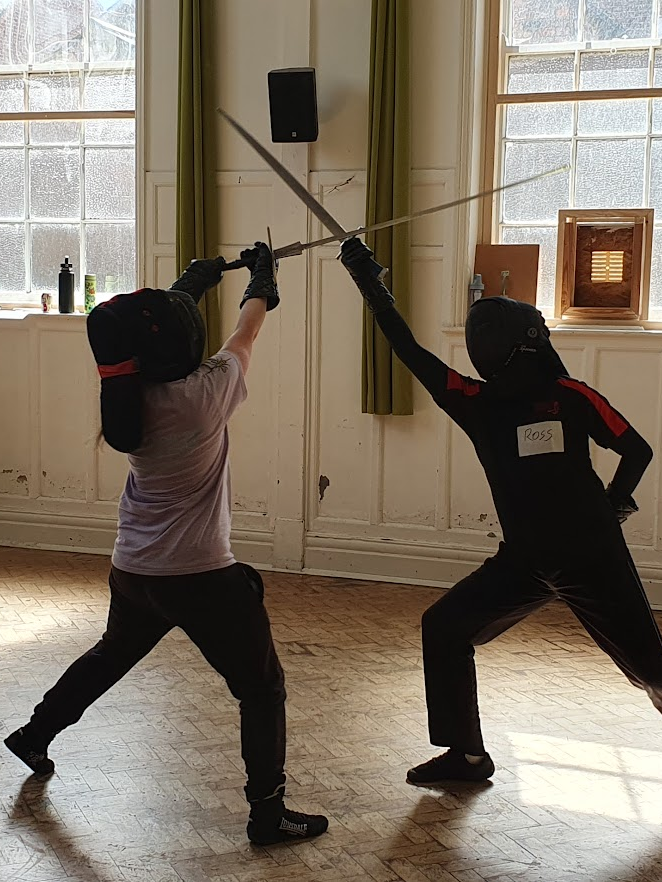
This trophy is awarded for technical skill in fencing. The tournament is fought with minimal protective equipment (light gloves, a fencing mask, and a gorget), and prizes are awarded via a vote amonst your fellow fencers based upon who they enjoyed bouting with and who they felt was the most technically minded fencer.
Win or lose you have a good chance to pick up something for the mantlepiece, as long as you keep smiling, fence safely and cleanly, and enjoy your matches with everyone.
This is a zero-ego tournament, with have absolutely no tolerance for dangerous, reckless or hard hitting Tryhard style behaviour. The whole purpose of this tournament is demonstrate sound technique and control, and to smile throughout and enjoy bouting with your friends.
Thrust oriented weapons such as smallswords and later period rapiers are not really suitable for this tournament however you are welcome to enter with any steel cutting sword.
Sunday 14:00 – 15:40 (Training Room)
“That’s not flying, it’s falling, with style” (Aikido)
Jo York (she/her)
Hotspur School of Defence
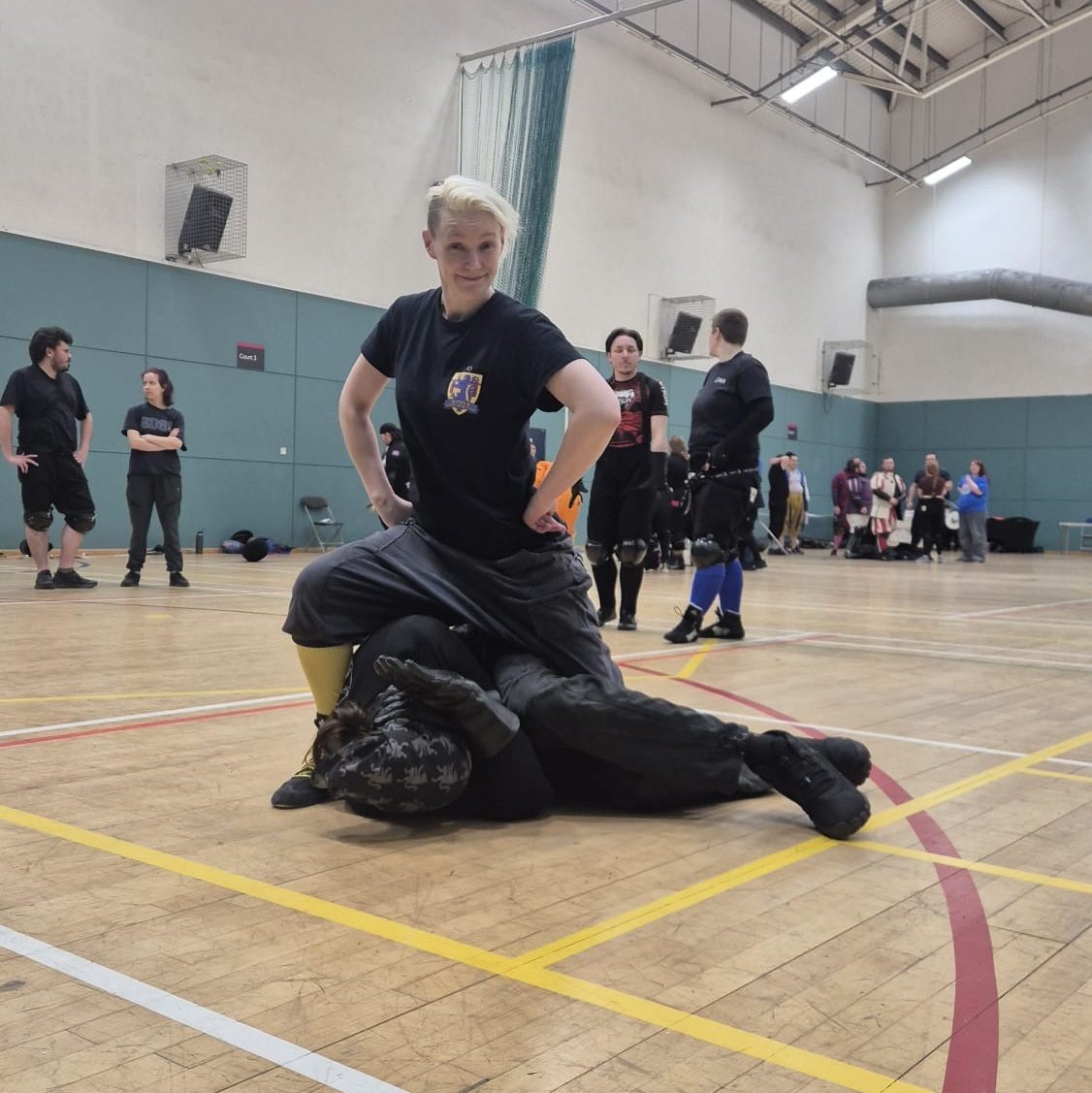

I asked Jo for a brief lesson description and I got a witty title that pretty much sums up entirely what Jo will be doing, as well as a Toy Story logo, so that’s what we’ll go with.
Expect some amazing throws, falls and other shenanigans! You’ll need absolutely nothing to take part in the class, just your body and some limbs.
Sunday 15:50 – 17:30 (Main Hall)
“Gettin’ Liggy with it: Lignitzer’s sword and buckler plays” (Sword and Buckler)
Lauren “Danger” Shaw (she/her)
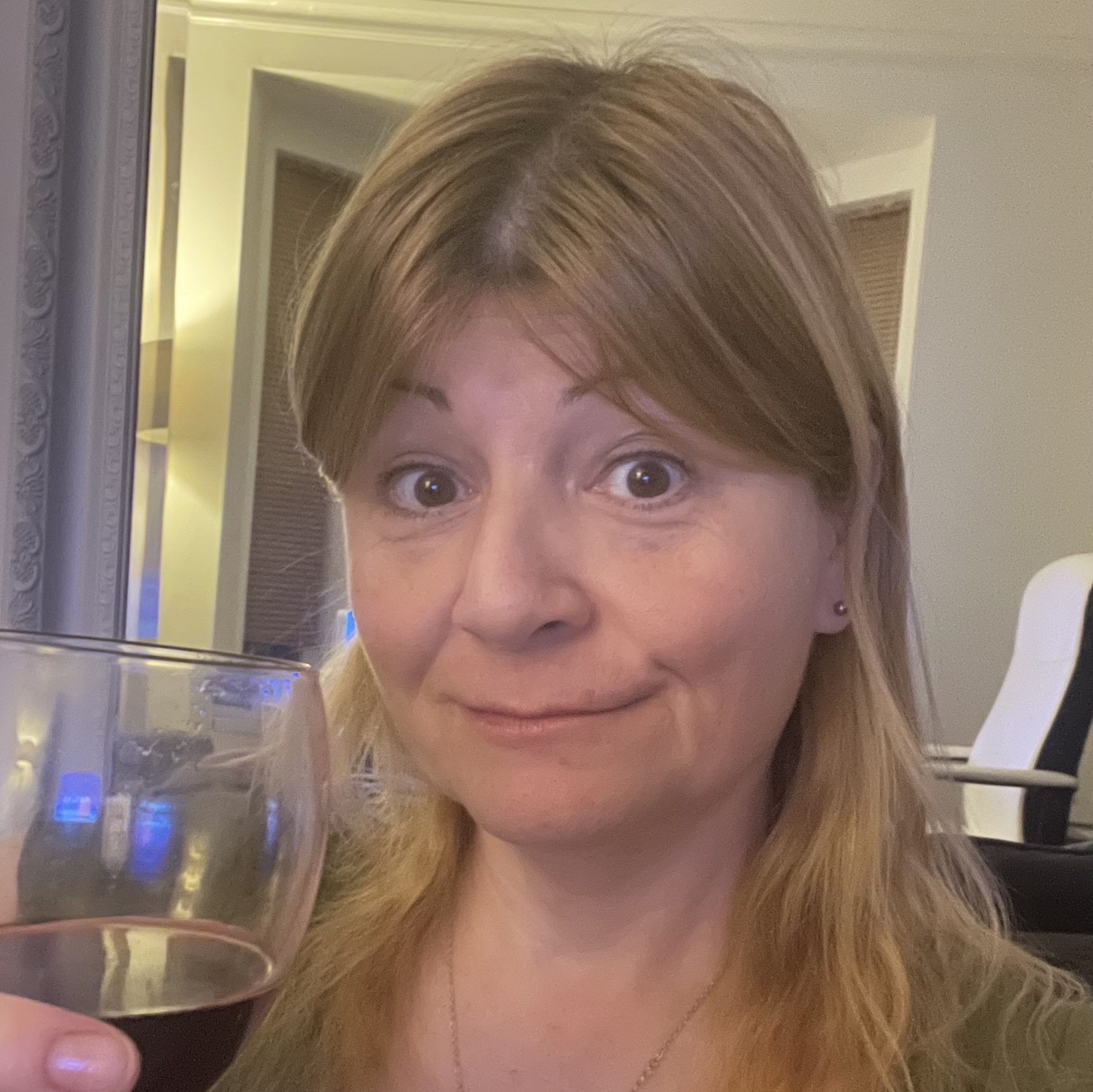
Join PhD student and medievalist Lauren Shaw, M.A., in a trip to the fifteenth century as we explore the six plays of Andre Lignitzer’s sword and buckler.
For this class, you’ll need a fencing mask and light gloves, a single handed sword (arming sword or messer are best) and a buckler. Some loaner equipment will be available.
Sunday 15:50 – 17:30 (Training Room)
“Activist Yoga for Lovely People”
(Yoga)
Amy Bullard (she/her)
The Teapot Collective
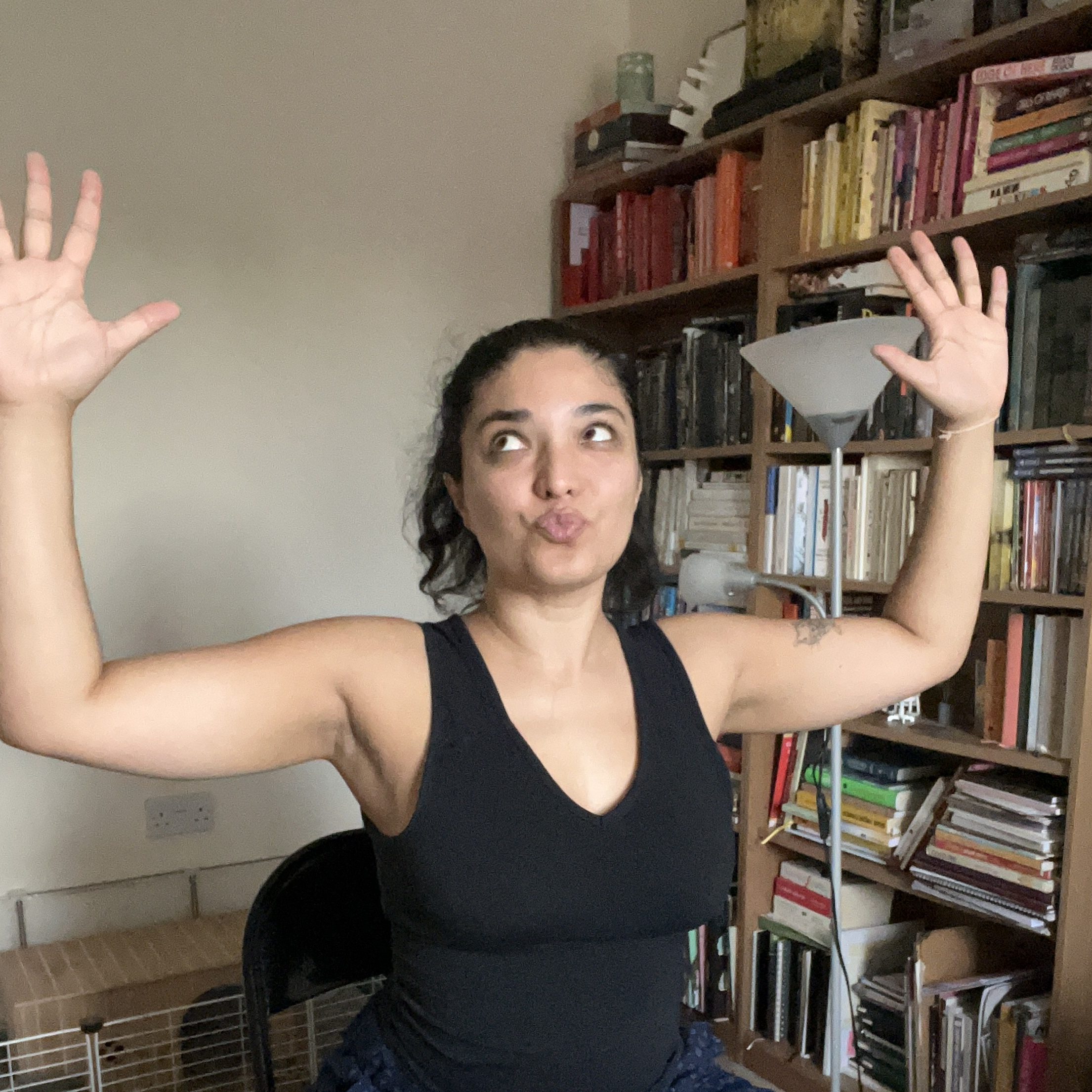
Join Amy (she/her), a York-based accessible yoga teacher, for an introduction to yoga as a practice for liberation, where we’ll talk, move, breathe, meditate and rest.
Together, we’ll contemplate the connections between activism and yoga and then embody these ideas through a practice.
As Activist Yoga for Lovely People is the final session of the weekend Amy will offer moments to reflect on what you’ve learned and enjoyed from the weekend.